
Custom Website vs WordPress: Which Solution Is Right for Your Business?
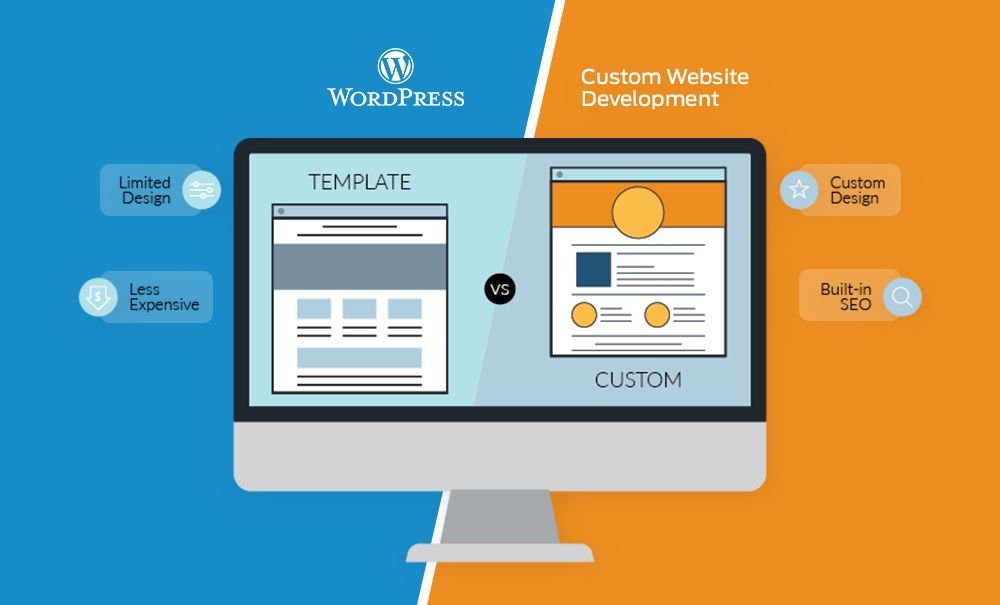
Choosing a business website today isn’t simply about getting online—it’s about investing in a platform that supports your goals now and in the years ahead. Whether you’re launching a startup in Australia, expanding an eCommerce business in the USA, or growing a professional services firm in Singapore or the Cayman Islands, your website plays a central role in attracting customers, generating leads, and building credibility.
One of the most common questions business owners ask is: “Should I choose a custom website or WordPress?” The answer isn’t always straightforward because both options offer distinct advantages. The right choice depends on your budget, business model, growth plans, technical requirements, and long-term digital strategy.
A WordPress website is often praised for its affordability, speed of deployment, and extensive plugin ecosystem. It’s an excellent choice for many small to medium-sized businesses that need a professional online presence without extensive custom functionality.
A custom website, on the other hand, is built specifically around your business requirements. Rather than adapting your processes to fit a content management system, developers create the website from the ground up, giving you greater flexibility, stronger integration capabilities, and room to scale as your business grows.
This guide compares Custom Website vs WordPress across the areas that matter most to business owners, including SEO, performance, security, cost, scalability, eCommerce, and long-term return on investment. Instead of declaring one option universally better, we’ll help you understand which solution fits different business situations so you can make an informed decision.
What Is a Custom Website?
A custom website is developed specifically for your business rather than being built on a pre-made theme or template. Developers create the design, functionality, database structure, and user experience based on your exact operational needs and growth objectives.
Unlike template-driven websites, custom development isn’t limited by the features available in a content management system. Everything—from customer portals and booking systems to ERP integrations and advanced reporting dashboards—can be designed around how your business actually operates.
Many custom websites are developed using modern frameworks such as Laravel, React, Vue.js, ASP.NET, or Node.js, depending on project requirements. These technologies provide developers with greater control over performance, security, and scalability. For businesses expecting significant growth or requiring complex functionality, a custom-built website often becomes a long-term technology investment rather than just another marketing asset.
How Custom Development Works
A typical custom development project follows several stages:
- Business discovery and requirements gathering
- User experience (UX) planning
- Interface (UI) design
- Backend development
- Frontend development
- API integration
- Testing and quality assurance
- Deployment
- Ongoing maintenance and optimisation
Because every component is purpose-built, businesses gain complete ownership over how the website functions.
Who Benefits Most?
A custom website is often the better fit for businesses that:
- Require unique workflows or advanced functionality
- Need integration with CRM, ERP, or third-party software
- Expect high traffic volumes
- Plan to scale across multiple locations or countries
- Want complete control over website architecture
- Operate in highly competitive industries where performance and user experience matter
For example, a logistics company needing customer dashboards, shipment tracking, automated invoicing, and internal reporting would benefit far more from a custom platform than a standard website built around plugins.
What Is WordPress?
WordPress is the world’s most widely used content management system (CMS), powering millions of websites across blogs, business websites, portfolios, online stores, and corporate platforms.
Its popularity comes from its flexibility, ease of use, and vast ecosystem of themes and plugins. Businesses can launch a professional website relatively quickly without building every feature from scratch.
Modern WordPress Development has evolved significantly. When properly configured with high-quality hosting, lightweight themes, and carefully selected plugins, WordPress can deliver excellent performance and strong SEO capabilities.
Benefits of WordPress
WordPress offers several advantages that make it attractive for many businesses.
Faster Development
A business website can often be launched much sooner than a fully custom-built solution because much of the core functionality already exists.
Lower Initial Investment
Development costs are generally lower, making WordPress attractive for startups and small businesses with limited budgets.
Easy Content Management
Non-technical users can update pages, publish blog posts, upload images, and manage content without needing developer assistance.
Large Plugin Ecosystem
Businesses can extend functionality using plugins for:
- Contact forms
- SEO
- Booking systems
- Memberships
- Analytics
- Marketing automation
- eCommerce
- Security
Large Developer Community
Finding developers, support resources, and educational materials is relatively easy due to WordPress’s widespread adoption.
Limitations of WordPress
Although WordPress is highly capable, it isn’t the ideal solution for every project.
As websites grow, businesses often install numerous plugins to add functionality. Poor-quality or outdated plugins can increase maintenance requirements, introduce compatibility issues, and affect performance if not managed carefully. Highly customised business workflows sometimes require extensive development that goes beyond what WordPress was originally designed to handle. At that point, a custom-built application may become the more practical long-term solution.
Custom Website vs WordPress: Side-by-SSide Comparison
The biggest differences become clearer when comparing the platforms across the factors that influence long-term business success.
| Feature | Custom Website | WordPress |
|---|---|---|
| Development | Built from scratch | CMS-based |
| Initial Cost | Higher | Lower |
| Time to Launch | Longer | Faster |
| Flexibility | Excellent | High, but plugin-dependent |
| SEO Potential | Excellent | Excellent when optimised |
| Performance | Highly optimised | Depends on setup |
| Security | Fully controlled | Strong with proper maintenance |
| Scalability | Excellent | Very good for most businesses |
| Integrations | Unlimited | Extensive but sometimes plugin-dependent |
| Maintenance | Developer managed | CMS and plugin updates required |
| Content Editing | Custom admin panel or CMS | Very user-friendly |
| Ownership | Full control | Full ownership with CMS dependency |
Rather than asking which platform is “better,” it’s more useful to ask which one aligns with your business objectives over the next three to five years.
Custom Website vs WordPress SEO
Many business owners assume custom websites automatically outperform WordPress in search rankings. In reality, Google doesn’t rank websites based on the platform they’re built on. It evaluates how well a website meets user needs.
Both custom websites and WordPress sites can achieve excellent SEO results when they follow technical best practices.
Key ranking factors include:
- Fast page loading
- Mobile responsiveness
- Clean site architecture
- Crawlability
- Internal linking
- Structured data
- High-quality content
- Secure HTTPS connections
- Positive user experience
A custom website allows developers to create streamlined code without unnecessary features, which can improve technical efficiency. WordPress also performs exceptionally well when built using lightweight themes, quality hosting, proper caching, image optimisation, and reputable SEO tools. For most businesses, the deciding factor isn’t the platform—it’s the quality of implementation.
Practical Example
Imagine two accounting firms targeting the same local market. Firm A invests in a custom website but publishes outdated content and ignores technical optimisation. Firm B uses WordPress with well-structured service pages, useful blog content, fast hosting, schema markup, and consistent SEO maintenance. Firm B is far more likely to achieve stronger organic visibility because its website delivers a better overall experience for users and search engines.
WordPress vs Custom Website Performance
Website performance directly influences user satisfaction, conversion rates, and search visibility. Visitors expect pages to load quickly, especially on mobile devices. A custom website gives developers complete control over every line of code. Features are built only when needed, reducing unnecessary scripts and improving efficiency.
WordPress performance, however, depends heavily on how the website is configured. A well-maintained WordPress site with quality hosting, optimised images, caching, and carefully selected plugins can perform exceptionally well. Conversely, a site overloaded with unnecessary plugins, heavy themes, and unoptimised media may experience slower load times.
Google’s Core Web Vitals highlight performance metrics such as loading speed, responsiveness, and visual stability. Regardless of the platform, businesses should regularly monitor these metrics and optimise their websites to maintain a positive user experience.
For businesses anticipating significant traffic growth, custom development offers greater flexibility to optimise server resources, database queries, and application architecture. For many small and medium-sized organisations, however, a professionally built WordPress site provides more than enough performance to support everyday operations.
WordPress vs Custom Website Security
Security is one of the biggest concerns when choosing a website platform, particularly if your business collects customer information, processes online payments, or integrates with business systems.
A common misconception is that WordPress is insecure. In reality, WordPress itself is regularly maintained and updated by a large global community. Most security issues arise from outdated plugins, unsupported themes, weak passwords, or poor hosting—not from WordPress itself.
A professionally managed WordPress website can provide a high level of security when businesses follow best practices such as:
- Keeping WordPress core updated
- Updating plugins and themes regularly
- Removing unused plugins
- Using strong authentication methods
- Installing SSL certificates
- Choosing reliable hosting
- Scheduling regular backups
- Monitoring for malware and suspicious activity
A custom website offers a different advantage. Because it’s built specifically for your business, developers can implement security controls that match your exact requirements. There’s no dependency on third-party plugins unless they’re intentionally included, reducing potential attack surfaces.
Custom development also makes it easier to implement advanced security features such as:
- Custom authentication systems
- Role-based permissions
- API security controls
- Data encryption
- IP restrictions
- Custom audit logging
- Multi-factor authentication
- Secure business system integrations
The better option depends on your business requirements. For many service businesses and SMEs, a professionally maintained WordPress website provides excellent security. Organisations with strict compliance requirements, complex applications, or sensitive business data may benefit from a custom-built solution.
Custom Website vs WordPress Cost Comparison
Budget is often one of the first considerations when planning a new website. However, focusing only on the initial development cost can lead to a decision that becomes more expensive over time.
Initial Development Costs
A WordPress website generally has a lower upfront investment because much of the core functionality already exists. Businesses can launch quickly using professionally designed themes and trusted plugins, making it an attractive option for startups and growing companies.
A custom website typically requires more planning, design, development, testing, and quality assurance. As a result, the initial investment is usually higher.
Ongoing Maintenance
Every website requires maintenance, regardless of the platform.
For WordPress, this commonly includes:
- Core updates
- Plugin updates
- Theme updates
- Security monitoring
- Backups
- Performance optimisation
For custom websites, maintenance may involve:
- Framework updates
- Server maintenance
- Feature enhancements
- Security reviews
- Performance improvements
- Compatibility testing
The maintenance approach differs, but both platforms benefit from ongoing support to remain secure and efficient.
Long-Term Value
The most cost-effective solution depends on your business goals. If your website mainly provides company information, generates enquiries, and publishes blog content, WordPress often delivers excellent value. If your business relies on custom workflows, advanced integrations, or software-like functionality, investing in a custom platform may reduce future redevelopment costs and support long-term growth.
Instead of asking, “Which costs less?” a better question is, “Which delivers greater value over the next five years?”
Custom Website vs WordPress for eCommerce
Selling online introduces additional considerations beyond standard business websites.
Both custom development and WordPress can support successful eCommerce businesses, but each suits different scenarios.
When WordPress Works Well
A WordPress website using WooCommerce is often ideal for businesses that:
- Sell a manageable product catalogue
- Need marketing flexibility
- Want full control over content
- Publish blogs to support SEO
- Require a cost-effective online store
WooCommerce supports payment gateways, shipping integrations, inventory management, customer accounts, promotions, and many other features through extensions.
For many small and medium-sized retailers, it provides everything needed to build a successful online store.
When Custom Development Makes Sense
A custom eCommerce platform becomes more valuable when businesses require:
- Highly customised purchasing journeys
- Complex pricing rules
- Multi-vendor functionality
- ERP integration
- CRM synchronisation
- Warehouse automation
- Large product catalogues
- International operations
- Unique checkout experiences
These projects often extend beyond traditional online shopping into broader business management systems. As operations become more complex, custom development provides greater flexibility to support future growth.
Which Businesses Should Choose WordPress?
WordPress is an excellent option for businesses that prioritise speed, affordability, and ease of content management.
It often suits:
- Local service businesses
- Professional service firms
- Consultants
- Marketing agencies
- Small retailers
- Restaurants
- Healthcare clinics
- Trades and construction businesses
- Educational organisations
- Startups validating new ideas
If your website’s primary purpose is to attract enquiries, showcase services, publish helpful content, and rank well in search engines, WordPress is often more than capable. With the right design, technical optimisation, and ongoing maintenance, a professionally developed WordPress website can support years of business growth.
Which Businesses Should Choose Custom Website Development?
A custom website becomes the stronger choice when your business requires technology that extends beyond standard website functionality.
Examples include:
- Enterprise organisations
- Software companies
- Logistics providers
- Financial service platforms
- Healthcare systems
- Property management portals
- Membership platforms
- Online marketplaces
- Booking platforms
- Businesses integrating ERP or CRM systems
Custom development is particularly valuable when your website forms part of your operational infrastructure rather than simply serving as a marketing tool. Instead of adapting your business processes to fit existing software, a custom platform is designed around how your business actually works.
How to Decide Between Custom Website vs WordPress
If you’re still uncertain, consider these questions:
Choose WordPress if you:
- Need a website launched quickly
- Have a limited initial budget
- Want to manage content internally
- Primarily need marketing and lead generation
- Plan to publish regular blog content
- Require standard business website functionality
Choose Custom Website Development if you:
- Need unique business functionality
- Expect rapid growth
- Require advanced integrations
- Manage large amounts of data
- Need complete flexibility
- Want a platform tailored specifically to your operations
The right decision isn’t about choosing the most advanced option—it’s about selecting the solution that aligns with your current needs while supporting future growth.
How Graphica Pro Artistry Helps Businesses Make the Right Choice
Every business has different objectives, workflows, and growth plans. That’s why there isn’t a one-size-fits-all answer to the Custom Website vs WordPress debate. At Graphica Pro Artistry, the focus is on understanding your business before recommending a solution.
For some organisations, a professionally developed WordPress website provides the ideal balance of flexibility, affordability, and SEO performance. For others, a fully custom platform delivers the scalability, integration capabilities, and long-term efficiency needed to support business growth.
Whether you’re launching a new business website, upgrading an existing platform, or planning a complex digital transformation project, choosing the right technology from the beginning helps reduce future costs and creates a stronger foundation for growth.
If you’re unsure which approach best suits your business, speaking with experienced developers can help clarify your options and ensure your investment aligns with your long-term goals.
Conclusion
The debate around Custom Website vs WordPress often assumes there must be a single winner. In reality, both solutions are capable of delivering excellent results when implemented correctly.
WordPress remains one of the best options for businesses seeking a flexible, cost-effective, and SEO-friendly website that can be launched relatively quickly. Custom development becomes increasingly valuable when businesses require advanced functionality, deeper software integrations, enhanced scalability, or highly tailored user experiences.
Rather than focusing solely on upfront costs or technical features, evaluate how your website will support your business over the next several years. A platform that aligns with your strategy today and can grow alongside your organisation tomorrow will deliver the greatest long-term value.
By understanding your business objectives before selecting a platform, you’ll be better positioned to create a website that attracts customers, supports operations, and contributes to sustainable growth.
Frequently Asked Questions
Is Custom Website Better Than WordPress?
Not necessarily. A custom website offers greater flexibility and scalability, while WordPress provides a faster, more cost-effective solution for many businesses. The best choice depends on your goals, budget, and technical requirements.
Which Is Better for SEO?
Both platforms can perform exceptionally well in search engines. Success depends more on technical optimisation, quality content, website speed, user experience, and ongoing SEO strategy than on the platform itself.
Which Website Loads Faster?
A well-built custom website can achieve outstanding performance because developers control every aspect of the codebase. However, an optimised WordPress website using quality hosting, caching, and lightweight themes can also deliver excellent loading speeds.
Which Platform Is More Secure?
Both can be highly secure when maintained properly. WordPress requires regular updates and plugin management, while custom websites rely on secure coding practices and ongoing maintenance.
Which Costs Less?
WordPress usually has a lower initial development cost. Custom websites generally require a larger upfront investment but may provide greater long-term value for businesses with complex operational requirements.
Can I Upgrade from WordPress to a Custom Website Later?
Yes. Many businesses begin with WordPress to establish their online presence and later migrate to a custom platform as their requirements become more sophisticated.
Which Is Better for eCommerce?
WooCommerce on WordPress works well for many online stores. Businesses with highly customised purchasing processes, advanced integrations, or enterprise-scale operations may benefit more from custom eCommerce development.
Which Option Is Best for Small Businesses?
For most small businesses, a professionally developed WordPress website offers an excellent balance of affordability, flexibility, and growth potential. As operational needs become more complex, transitioning to a custom platform may become worthwhile.
