
Accounting Website Design Best Practices | Australia
For Australian accounting firms, bookkeepers and tax agents, accounting website design best practices come down to a few fundamentals: clear service information, genuine credibility, mobile usability, useful content, secure enquiry pathways and a website structure that supports search visibility.
Looking to hire? See our Web Design Melbourne service for packages, pricing and real client results.
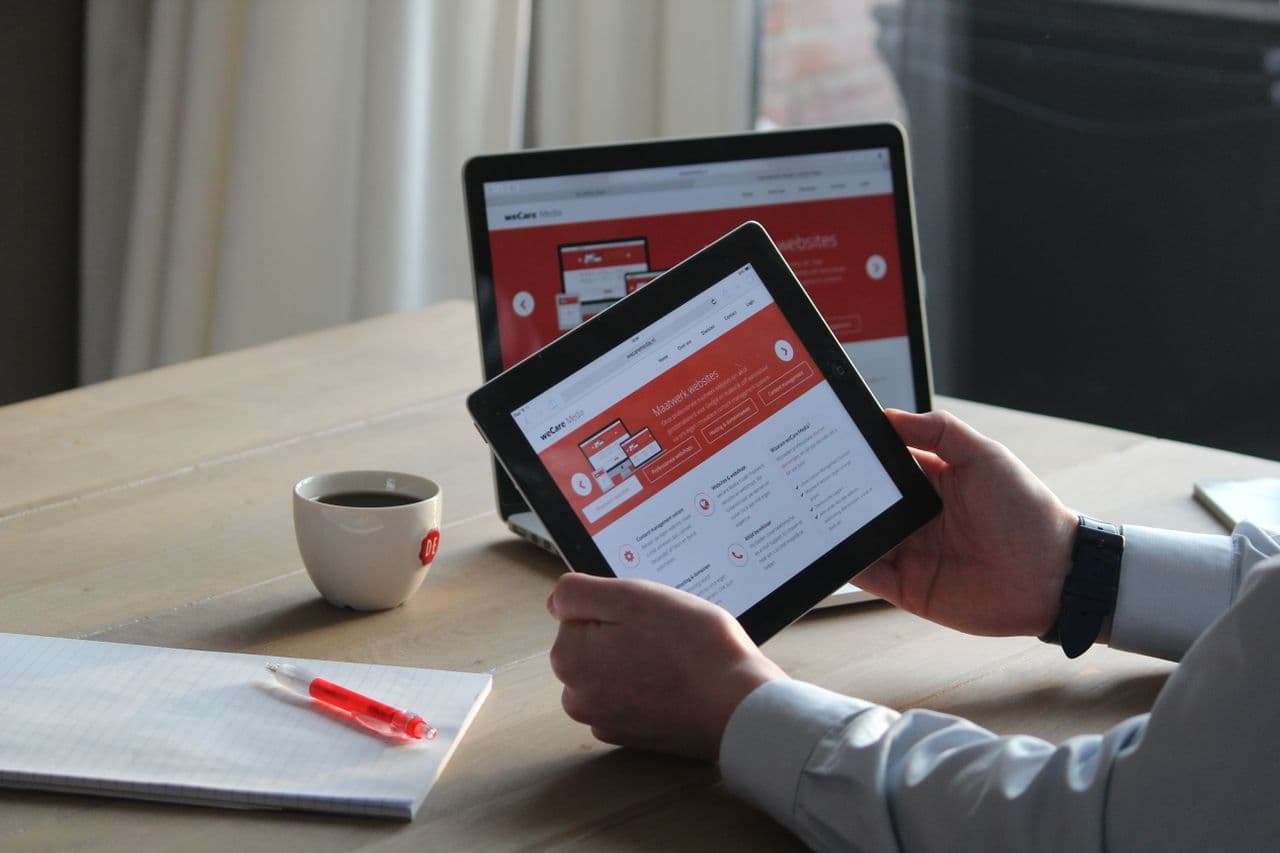
A good accounting website should do more than list tax services and display a professional-looking logo. It should help prospective clients understand what your firm does, why they should trust you, and how to take the next step.
For Australian accounting firms, bookkeepers and tax agents, accounting website design best practices come down to a few fundamentals: clear service information, genuine credibility, mobile usability, useful content, secure enquiry pathways and a website structure that supports search visibility.
The challenge is getting those elements right without paying for features your practice does not need.
This guide explains what to prioritise, what accounting website design can cost, and how to assess a website provider before committing to a project.
What Makes Accounting Website Design Different?
Accounting is a trust-led service. Prospective clients may be comparing firms before sharing financial information, asking for tax assistance or discussing the financial position of their business.
That makes the website's job different from a typical retail website. It must communicate competence, explain potentially complicated services in plain English and make contacting the firm feel straightforward.
A useful accounting website should answer five questions quickly:
- Who does your firm help?
- Which services do you provide?
- What makes your practice relevant to this visitor?
- How can a prospective client verify your credentials and experience?
- What should they do next?
If visitors have to search through vague service descriptions, hunt for a phone number or guess whether you work with businesses like theirs, the design is creating unnecessary friction.
12 Accounting Website Design Best Practices
1. Write a specific, client-focused homepage headline
Avoid opening with generic statements such as “Your trusted financial partner”. They could describe almost any practice.
Explain your audience and the work you do. For example:
“Accounting and bookkeeping for Melbourne small businesses, sole traders and growing companies.”
That is an illustrative headline, not a claim about a particular firm's services. Adjust the wording to reflect your actual expertise, service area and client base.
A useful homepage structure includes a clear headline, a concise explanation of your services, an obvious contact option and links to the pages visitors are most likely to need.
2. Give each important service enough space
A single Services page can work for a small practice with a narrow offering. It becomes less useful when your firm handles different types of clients and work.
Consider separate pages for relevant services such as:
- Individual tax returns.
- Business accounting and tax.
- Bookkeeping and BAS services.
- SMSF services, where offered.
- Business advisory and management reporting, where offered.
Each page should explain what the service involves, who it suits, what information a client may need to prepare and how to enquire.
Do not create dozens of nearly identical pages just to target suburbs or keywords. Every page should provide a distinct, useful reason to exist.
3. Make credentials and professional experience verifiable
Accounting clients need reasons to trust the people behind the website.
Include genuine team photographs, accurate biographies, relevant qualifications, professional memberships and registration details where applicable. Link to authoritative registers when that helps a prospective client verify a claim.
Display software partner badges only when the practice is entitled to use them. Do not imply that a logo, membership or certification proves more than it actually does.
Testimonials and reviews should be genuine and presented with appropriate permission. A real explanation of your team's experience is more useful than generic claims about being exceptional.
4. Explain your process and set expectations
People are more comfortable enquiring when they understand what happens next.
Explain the steps a prospective client can expect, such as an initial discussion, identifying the work required, confirming scope and fees, and agreeing on the next steps.
If you publish indicative fees, explain what is included and what might change the final quote. If fees depend on the complexity of a client's affairs, say so plainly.
Avoid promising a particular tax outcome, refund, financial saving or turnaround time unless it is properly supportable and appropriate to communicate.
5. Design for mobile first
Your website should be easy to use on a smartphone, not simply shrink down to fit a smaller screen.
Check that:
- Text is readable without zooming.
- Menus and buttons are easy to tap.
- Phone numbers can be tapped to call.
- Forms fit the screen and are easy to complete.
- Important service information is not hidden behind awkward layouts.
- Images are appropriately sized and pages load efficiently.
Test real pages on different devices, including service pages and contact forms. A homepage that looks polished on a desktop does not prove the entire site works well on mobile.
6. Make navigation simple
A prospective client should not need to understand accounting terminology to find the relevant service.
Use familiar navigation labels such as Services, About, Resources and Contact. Group related pages logically and use descriptive link text.
Keep the most important actions easy to find. For example, a visitor reading a business tax page should not have to return to the homepage to ask about that service.
A simple site with well-organised pages is often more useful than a complicated site with elaborate animations and unnecessary menu options.
7. Design enquiry forms around the client's needs
A long form can discourage enquiries. A form that asks too little may leave the practice without enough information to respond usefully.
Start with the essentials: name, contact details, the type of assistance required and an optional message. Add other fields only when they serve a clear purpose.
Where different services require different conversations, route visitors towards relevant enquiry options. A business accounting enquiry may need a different initial discussion from an individual tax-return enquiry.
Be clear about what happens after submission. Only publish response-time commitments that the practice can consistently meet.
Important: an ordinary website enquiry form should not become an informal channel for tax file numbers, bank details or sensitive financial documents. Use an appropriately secured process for collecting and transferring sensitive information.
8. Treat accessibility as part of usability
An accessible website makes information easier to use for more people.
Use sufficient colour contrast, descriptive headings, meaningful link labels, alternative text for informative images and keyboard-accessible navigation. Ensure form fields have clear labels and errors are explained in text.
Do not communicate essential information through colour alone. Avoid autoplaying audio and unnecessarily distracting movement.
Accessibility should be considered during design and development, then checked during testing. A visually attractive website is not automatically accessible.
9. Build a useful accounting website SEO structure
Accounting website SEO starts with making each page's purpose clear to search engines and people.
For a typical practice, the foundations include:
- Descriptive page titles and meta descriptions.
- A logical heading hierarchy.
- Useful, original service-page content.
- Internal links between related services and resources.
- Accurate business name, address and phone details.
- An XML sitemap and appropriate indexing settings.
- Analytics and Search Console configured correctly.
Local firms should keep their website information consistent with their Google Business Profile and other important business listings.
Technical SEO also matters. Check crawlability, redirects, broken links, mobile usability, page speed and indexation rather than assuming a visually finished site is search-ready.
Publishing a website does not guarantee prominent rankings. Competition, content quality, technical conditions and ongoing work all influence organic search performance.
10. Publish content that answers real client questions
A blog should help prospective clients understand the questions they already have, not exist merely to increase the number of pages on the website.
Useful topics might include business record-keeping, BAS preparation, tax deadlines, bookkeeping processes or accounting considerations for a particular industry—provided the firm has the expertise to discuss them accurately.
Make articles specific, readable and appropriately reviewed. Explain technical terms, link to authoritative sources when necessary, and distinguish general information from personalised professional advice.
Keep content current when legislation, thresholds or reporting requirements change. Outdated tax information can damage trust and create unnecessary confusion.
11. Protect privacy and review compliance-sensitive content
Accounting practices can handle information that is commercially sensitive or personally identifiable. Website design must therefore account for more than appearance.
Use HTTPS, maintain software and security updates, restrict administrative access and establish an appropriate backup process. Review the systems used for enquiry handling, document transfer and third-party integrations.
Check which privacy obligations apply to your practice. Where applicable, review the Australian Privacy Principles, Privacy Act 1988 and relevant Notifiable Data Breaches requirements with an appropriately qualified adviser.
A privacy policy alone does not make a website compliant. Forms and collection notices should accurately explain what information is collected, why it is collected and how it is handled.
If your practice provides regulated financial services, have the relevant disclosures and compliance-sensitive copy reviewed by the appropriate compliance professional.
12. Measure website performance without assuming every visit should convert
A website should be evaluated against its actual purpose.
Useful measures include:
- Relevant organic search impressions and clicks.
- Visits to important service pages.
- Clicks on phone numbers and email links.
- Form starts, successful submissions and abandoned forms.
- Enquiries by service type and, where practical, their eventual quality.
- Mobile performance and technical errors.
Set up tracking carefully and avoid collecting unnecessary personal information. Where privacy or consent requirements apply, implement tracking accordingly.
Do not judge the website solely by total traffic. A practice serving a defined region may prefer a smaller number of relevant enquiries to a large volume of visitors who are unlikely to become clients.
Measurement helps you decide what to improve next. It does not prove that a redesign alone caused a business outcome.
Accounting Website Design Examples: What to Learn
Looking at existing accounting websites can help you identify effective patterns. Focus on the reasoning behind the design rather than copying its colours or layout.
A specialist practice: A firm serving a defined industry should explain that specialisation early, use relevant examples and provide clear links to the services that audience needs.
A multi-service accounting firm: A firm offering tax, bookkeeping, business advisory and other services should organise its navigation and service pages around those distinct needs. Each page should give the visitor enough information to decide whether to make contact.
A regional practice: A firm serving a regional community can emphasise its actual service area, local experience and contact arrangements. It should not pretend to have an office in a town where it has no physical presence.
A growing practice: A larger firm may need more detailed staff profiles, service-specific enquiry paths, additional locations and integrations with existing business systems.
For further inspiration, compare the examples in KC Web Design's accounting website review and consider how their approaches would translate to your own practice.
The right example is not necessarily the most visually impressive. It is the one whose structure, content and functionality match the needs of your prospective clients.
Accounting Website Design Costs in Australia
Website costs depend on scope, content, design requirements, integrations, functionality and the amount of work needed after launch. Compare what you receive rather than choosing a provider on the headline figure alone.
Graphica Pro Artistry publishes the following website starting prices on its pricing page.
| Website package | Published starting price | Published scope |
|---|---|---|
| Starter | $499 | Five pages; professional mobile-first design; one combined service page; client supplies copy |
| Business | $1,499 | Eight to ten pages; custom branding; separate service pages; copy structured and edited |
| Growth | $2,999 | Twelve to twenty pages; fully custom design; service and sub-service pages; suburb pages; copywriting |
| Ecommerce | From $2,499 | Shopify or WooCommerce projects |
| Web app | From $7,500 | Custom web application projects |
| Mobile app | From $12,000 | Mobile application development |
| Custom software / ERP | From $9,500 | Custom software projects |
Price status: these are the prices published on graphicaproartistry.com.au at the time of research in October 2026. They are starting prices, not a personalised quotation.
The Starter package may suit a small practice that needs a basic professional presence. A firm with several distinct service lines may need the Business or Growth scope to accommodate separate pages and more extensive content.
Before agreeing to a project, confirm the number of pages, copywriting responsibilities, revisions, integrations, ownership, maintenance, GST treatment and any recurring fees in writing. The published package descriptions do not, by themselves, settle every accounting-specific requirement.
Also distinguish a website build from ongoing marketing. Initial SEO setup is not the same as a continuing SEO campaign.
For context, Graphica Pro Artistry publishes Local SEO at $990 per month, Growth SEO at $1,690 per month and National SEO at $2,990 per month. Its published technical SEO audit is $690. These are separate services, not mandatory additions to every website project.
Compare website and SEO packages or contact the team to discuss the actual scope of your project.
Local SEO vs National SEO for Accounting Firms
Your website structure should reflect where you genuinely serve clients.
Local targeting makes sense when a practice relies on a defined city, suburb or regional catchment. Build useful location information around real service coverage and make your contact details consistent.
National targeting may suit firms that can serve clients across Australia and have a meaningful reason to attract enquiries from different states or regions. National campaigns generally require a broader content and competition strategy.
Do not create near-identical pages for every suburb merely to capture search traffic. Thin location pages can offer little value to visitors and make a website harder to maintain.
Australian seasonality also matters. Tax-time questions, BAS deadlines and end-of-financial-year planning can influence what clients search for throughout the year. Publish accurate, timely content that your team can maintain.
For small practices, a well-structured website and carefully chosen local SEO priorities may be a more sensible starting point than pursuing every national keyword at once.
Who Should Reconsider a Website Redesign?
A redesign is not automatically the right investment for every practice.
Reconsider the project if:
- Your existing website already serves its purpose and you cannot identify a meaningful problem to solve.
- You expect a new design alone to guarantee rankings, enquiries or revenue.
- You have not decided which clients or services the website should priorities.
- You are not prepared to supply accurate content, review drafts or approve changes.
- The proposed project includes expensive features without a clear business or client need.
Be cautious of providers who promise guaranteed Google rankings or present a low initial price without explaining ongoing fees and scope.
There is nothing inherently wrong with a small budget or a simple website. The issue is whether the proposed solution matches your requirements.
How to Choose an Accounting Website Design Agency
Ask each provider the same practical questions.
What is included in the price? Request a written scope covering page count, content, design, revisions, functionality and launch support.
Who writes and checks the content? Accounting information should be accurate, useful and reviewed by the practice. Clarify who is responsible for technical and compliance-sensitive claims.
Can you inspect relevant work? Ask for real examples and clarify the provider's actual role in each project. An example from a different industry may demonstrate technical capability, but it is not proof of extensive accounting-sector experience.
Will you own the website? Confirm ownership of the domain, website files, content and accounts, and establish how access or transfer works if the relationship ends.
How is ongoing support charged? Separate hosting, maintenance, security updates, content changes, SEO and advertising costs.
How will success be evaluated? Agree on useful measures such as form functionality, indexing, mobile usability and relevant enquiry tracking. Treat traffic and ranking forecasts as estimates, not promises.
For a starting point, Graphica Pro Artistry has a dedicated accounting and finance web design page outlining its packages and approach. The page identifies Wealth Square Accountants as its one documented client in this category, an important qualification when evaluating industry experience.
Frequently Asked Questions
1. What should an accounting firm's website include?
At minimum, it should explain the firm's services, intended clients, team and relevant credentials, contact options, privacy practices and the next steps for a prospective client. Add separate service pages, FAQs and educational content where they provide genuine value.
2. How much does accounting website design cost in Australia?
Costs depend on scope. Graphica Pro Artistry publishes website packages at $499, $1,499 and $2,999, with larger and specialised projects priced separately. These are published starting prices, not a guarantee that every accounting practice can be accommodated within a particular tier.
3. What makes an accounting website mobile-friendly?
Readable text, responsive layouts, simple navigation, tappable contact options, usable forms and efficient loading all contribute. Test important pages on real devices instead of relying only on a desktop preview.
4. How does SEO help an accounting firm website?
SEO helps search engines understand and index relevant pages, while useful content and clear service structures help prospective clients find information. Results vary with competition, website quality, location, budget and ongoing work; SEO does not guarantee rankings or enquiries.
5. How long does it take to build an accounting website?
Timing depends on page count, content readiness, design complexity, integrations and approvals. Graphica Pro Artistry states that most five-page Starter websites launch within ten business days of receiving the required content and images. Larger projects can take longer. Confirm your own delivery schedule in the written scope.
6. What security measures should an accounting website have?
Consider HTTPS, maintained software, strong administrative access controls, backups, secure form handling and appropriate document-transfer arrangements. Review privacy and data-breach obligations that apply to your practice. A standard contact form should not be treated as a secure document portal.
7. Should an accounting firm choose a specialist agency or a general web designer?
Either can be appropriate. Compare relevant experience, the quality of the proposed information architecture, privacy awareness, content process, ownership terms and support arrangements. Ask for verifiable examples rather than assuming an agency's industry label proves its expertise.
8. Can a new accounting website guarantee Google rankings or more clients?
No responsible provider can guarantee specific Google rankings or revenue. SEO and advertising results vary with competition, budget and market conditions. Website design can improve usability and remove technical barriers, but business outcomes depend on factors beyond the design itself.
Final Checklist and Next Steps
Before publishing or redesigning your accounting website, confirm that:
- Your homepage clearly identifies the clients and services you focus on.
- Important services have useful, distinct pages.
- Credentials and testimonials are accurate and verifiable.
- The website is easy to use on mobile devices.
- Contact forms are simple and handle information appropriately.
- SEO foundations, internal links and business details are consistent.
- Privacy and compliance-sensitive content has been reviewed.
- Costs, deliverables, ownership and ongoing fees are documented.
- Analytics measure useful activity without assuming results are guaranteed.
The strongest accounting website is not necessarily the largest or most expensive. It is the one that explains your practice clearly, earns trust through verifiable information and gives the right prospective clients a straightforward way to contact you.
If you are reviewing your current site, start by identifying the biggest problem: unclear services, weak credibility, poor mobile usability, missing search foundations or a difficult enquiry process.
Graphica Pro Artistry publishes its accounting and finance website services and website pricing online. You can also contact the team to discuss your requirements.
Call 0405 207 904 or email info@graphicaproartistry.com.au to discuss your project.
SEO and advertising results vary with competition, budget, and market conditions — no agency can guarantee specific rankings or revenue. Be wary of anyone who promises otherwise.