 Skip to content
ERP Software Development Company: Global ERP Solutions Guide
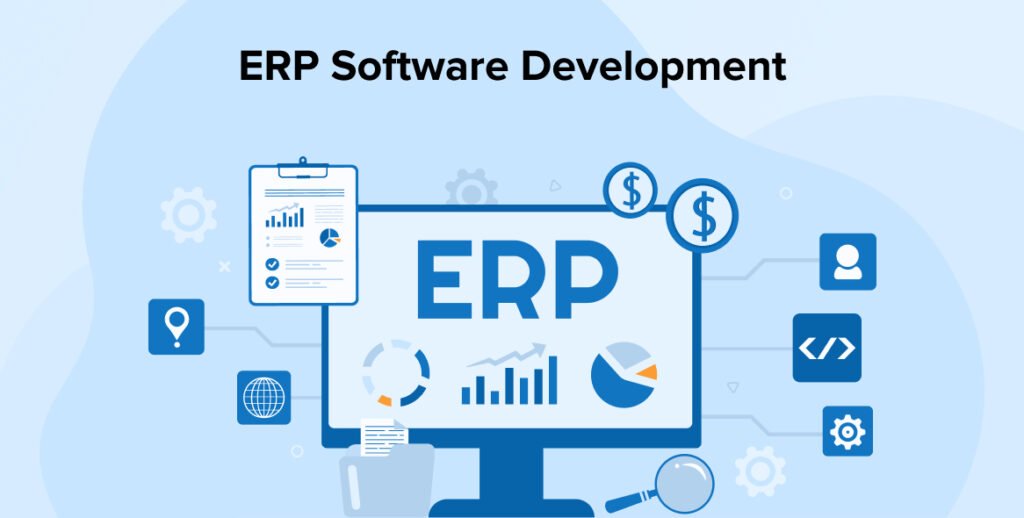
Enterprise systems are no longer just about managing data. Today, businesses expect intelligent, flexible, and visually intuitive platforms that support decision-making in real time. This is where a ERP Software Development Company becomes essential not only to build systems but to design enterprise ecosystems that actually work for people.
Modern organizations across the USA, Australia, Singapore, the UK, and the Cayman Islands are shifting toward customized ERP platforms that align with unique workflows, compliance structures, and user expectations. The demand is no longer for generic software but for scalable, experience-driven enterprise systems. This is also where design and usability play a critical role. Even the most powerful ERP system fails if users struggle to navigate it. That intersection between engineering and experience is where strategic creative agencies like Graphica Pro Artistry add value—especially in shaping how enterprise platforms feel, flow, and perform visually.
What an ERP Software Development Company Actually Does
A ERP Software Development Company builds integrated systems that connect core business functions into a unified platform. These functions typically include finance, human resources, procurement, inventory, supply chain, and customer management.
However, modern ERP development goes beyond coding modules. It includes:
- Designing workflows that reflect real business operations
- Building dashboards that simplify complex data
- Creating interfaces that reduce training time
- Ensuring scalability across regions and business units
In essence, ERP development is about translating business logic into a structured digital system that supports efficiency and visibility.
Why Businesses Need Custom ERP Development
Off-the-shelf ERP systems often force businesses to adapt their processes to the software. This creates inefficiencies, workarounds, and long-term operational friction.
A Custom ERP Development Services USA approach solves this by aligning software with actual business workflows.
Key advantages include:
- Tailored workflows for specific industries
- Better integration with existing tools
- Improved scalability for global operations
- Higher user adoption rates due to familiarity
- Reduced operational redundancy
Custom ERP systems are especially important for enterprises operating across multiple jurisdictions such as Australia, Singapore, and the UK, where compliance and operational standards vary significantly.
Key Components of Modern ERP Systems
Modern ERP platforms are modular, scalable, and cloud-driven. Their effectiveness depends on how well each component integrates with the others.
Finance Modules
Handles accounting, budgeting, forecasting, and financial reporting. Real-time visibility is critical here.
HR Systems
Manages recruitment, payroll, performance tracking, and employee lifecycle management.
Inventory & Supply Chain
Tracks goods, suppliers, logistics, and stock movement in real time.
UX/UI Dashboards
This is often overlooked but critically important. A well-designed dashboard determines how effectively users interact with ERP data. Poor design leads to inefficiency, while strong UX improves decision-making speed.
ERP Development Across Global Markets
USA
Businesses in the US prioritize scalability, AI integration, and automation. ERP Application Development Company USA solutions are heavily focused on enterprise-grade architecture.
Australia
Australian enterprises emphasize compliance, sustainability tracking, and industry-specific ERP systems such as Manufacturing ERP Software Development Australia.
Singapore
Singapore is a hub for digital transformation. Companies demand highly optimized ERP Consulting and Development Singapore services focused on efficiency and innovation.
Cayman Islands
Offshore businesses often require Custom Business ERP Software Cayman Islands solutions that support financial structuring and global operations.
UK
UK enterprises prioritize GDPR compliance, financial accuracy, and cross-border operational integration.
Cloud ERP vs Traditional ERP Systems
Cloud ERP systems are rapidly replacing legacy on-premise solutions.
Cloud ERP advantages:
- Remote accessibility
- Lower infrastructure cost
- Faster deployment cycles
- Automatic updates
- Better scalability
Traditional ERP systems, however, still exist in industries requiring strict internal control over infrastructure.
A modern Cloud ERP Development Company Australia typically focuses on hybrid scalability models that allow flexibility across enterprise environments.
ERP Implementation Challenges Businesses Face
ERP systems are powerful but complex. Common challenges include:
- High implementation costs
- Data migration complexity
- Resistance from employees
- Lack of training and onboarding
- Poor system usability
Most failures are not technical—they are experiential. When systems are not intuitive, users avoid them, reducing ROI significantly.
Role of UX/UI Design in ERP Success
This is one of the most overlooked aspects of ERP development.
Even advanced systems fail when:
- dashboards are cluttered
- navigation is confusing
- workflows are inconsistent
Strong UX/UI design improves:
- user adoption
- operational speed
- decision-making clarity
- employee satisfaction
This is where design-led agencies like Graphica Pro Artistry play a strategic role—bridging the gap between enterprise logic and human usability.
ERP systems are not just software tools. They are daily operational environments. If they are difficult to use, they create friction across the entire organization.
How Graphica Pro Artistry Supports ERP Digital Experiences
While ERP systems are built by software developers, their success depends heavily on presentation, usability, and interface clarity.
Graphica Pro Artistry supports enterprise platforms by focusing on:
- ERP interface design systems
- Dashboard visualization structures
- UX optimization for enterprise workflows
- Branding consistency across software environments
This ensures ERP platforms are not only functional but also intuitive and visually structured for global users.
FAQs
1. What does a ERP Software Development Company do?
It designs and builds enterprise systems that integrate business processes like finance, HR, and supply chain into one platform.
2. Why is custom ERP better than standard ERP?
Custom ERP aligns with business workflows, improving efficiency and reducing operational friction.
3. What industries use ERP systems?
Manufacturing, retail, healthcare, finance, logistics, and technology companies widely use ERP systems.
4. What is cloud ERP?
Cloud ERP is a web-based system that allows access to enterprise data from anywhere with scalability and lower infrastructure costs.
5. Why is UX important in ERP systems?
Good UX improves adoption, reduces training time, and increases operational efficiency.
CTA
Enterprise ERP systems are only as strong as their usability, structure, and scalability. If your organization is building or modernizing an ERP platform, aligning development with strong UX and design systems can significantly improve performance and adoption.
Connect with Graphica Pro Artistry to explore how design-driven enterprise experiences can transform your ERP ecosystem into a scalable, intuitive, and globally adaptable system.
